
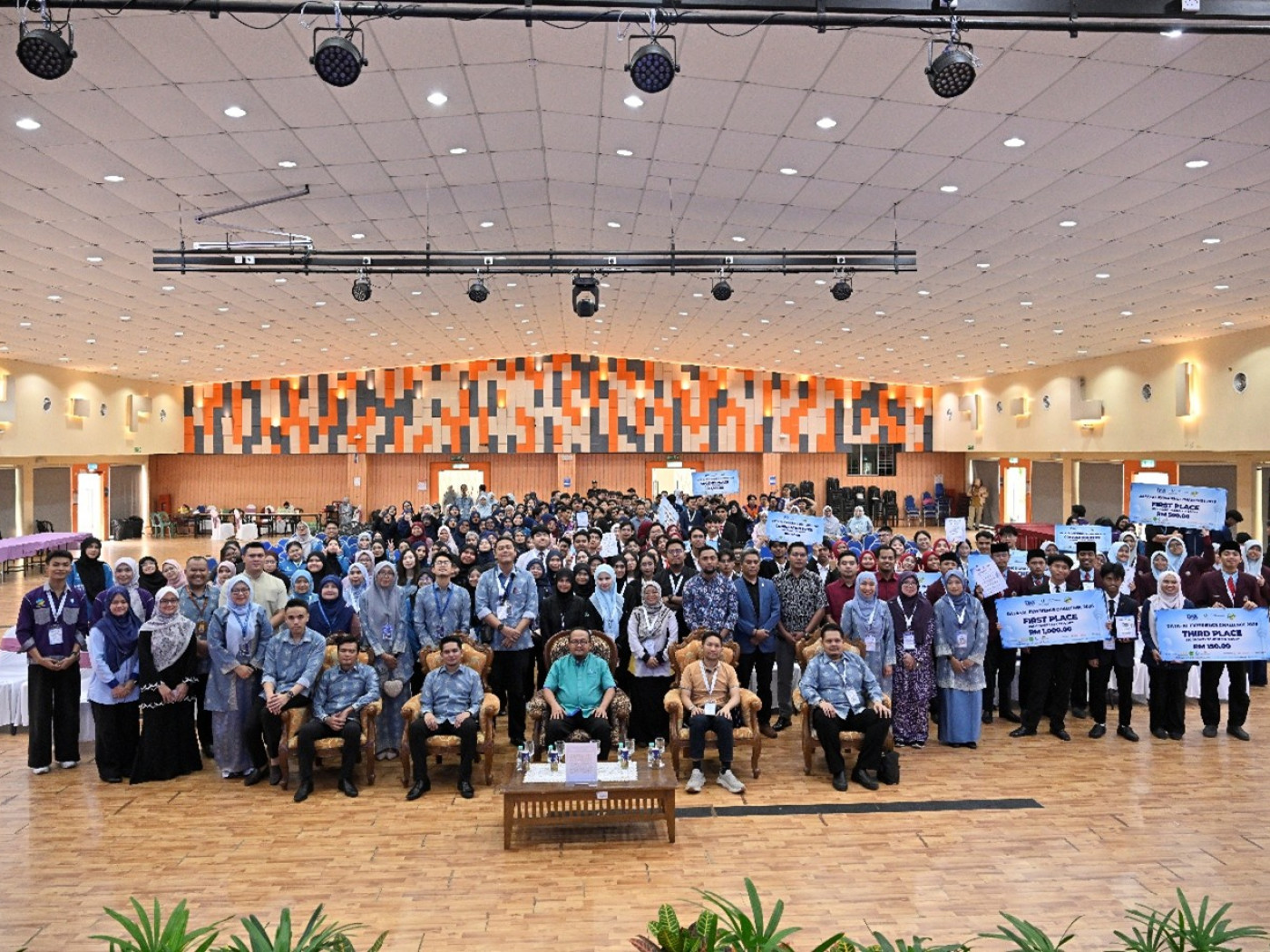
DAX Challenge 2026 Showcases the Talent and Creativity of the Younger Generation in Data Analytics and Artificial Intelligence (AI)
PAYA BESAR, 4 October 2026 – The Data-AI-Experience (DAX) Challenge 2026, themed “Integrating Data and AI for a Sustainable Pahang” and organized by the Centre for Mathematical Sciences (PSM), concluded with the announcement of the winners during the Opening and Closing Ceremony held at the Astaka Hall, UMPSA Paya Besar Campus.
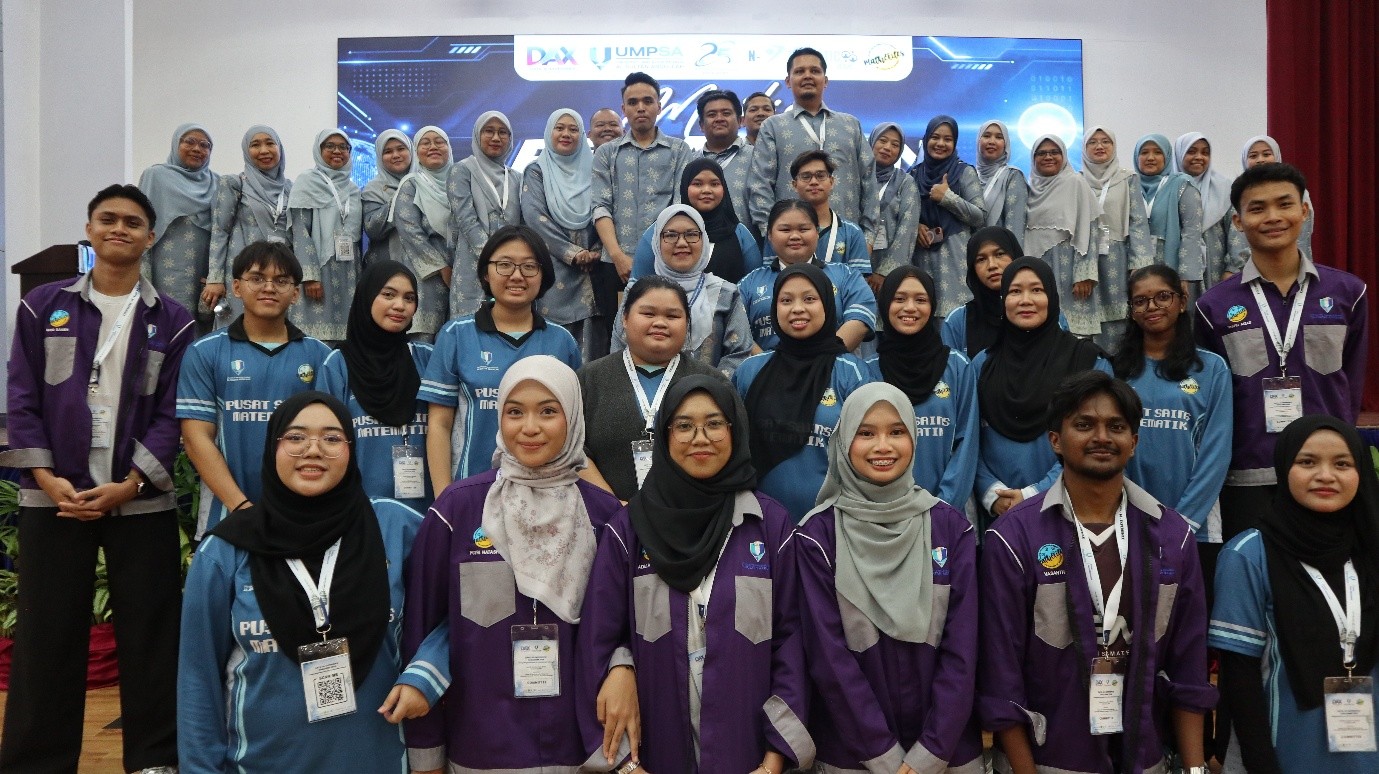
The day's program began with the DAX Challenge 2026 finals, featuring participants from the secondary school, pre-university, and undergraduate categories presenting ideas and solutions based on data and artificial intelligence (AI) to a panel of judges. The judging panel for the DAX Challenge 2026 was led by YBhg. Prof. Ir. Dr. Mohd Faizal bin Jamlos, Senior Director of the Centre for Climate Transition & Disaster Risk at Universiti Malaysia Pahang Al-Sultan Abdullah (UMPSA).
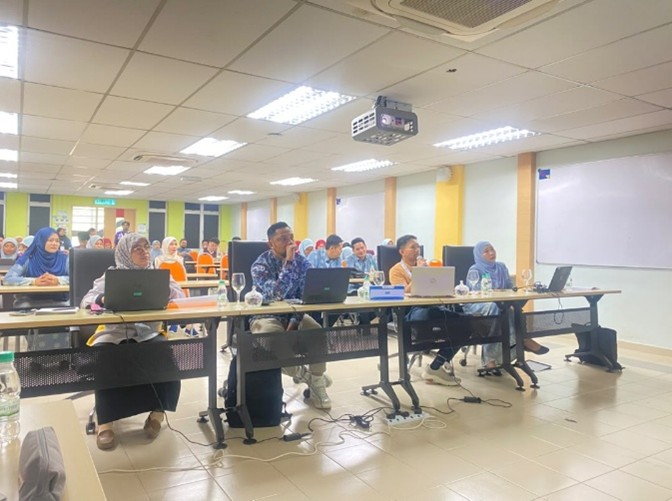
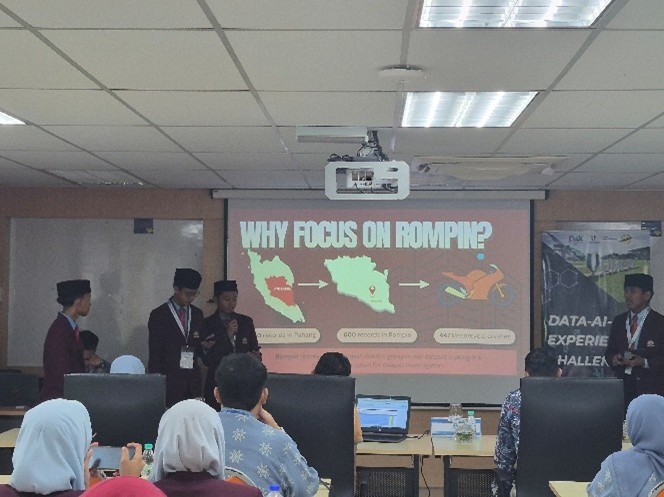
The panel of judges included Mr. Syed Samshiee bin Syed Abd Kadar, Senior Assistant Director at the Department of Statistics Malaysia (DOSM), Pahang State, and Ms. Rohayu binti Sarani, Head of the Smart Transport and System Development (PINTAR) Unit at the Road Safety Engineering and Environment Research Centre (REER), Malaysian Institute of Road Safety Research (MIROS). This competition provided participants with the opportunity to apply their knowledge, data analysis skills, creativity, and critical thinking to develop innovative solutions.
The afternoon session proceeded with the Opening and Closing Ceremony, followed by the announcement of winners, the Best Presenter Award for each category, and the Special AI Innovation Award.
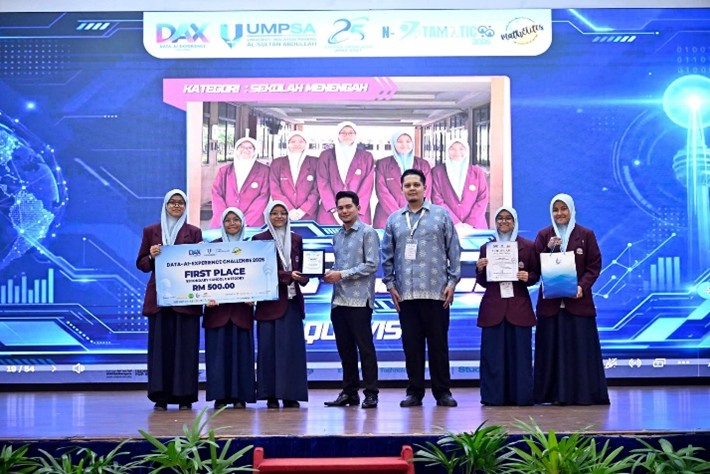
In the Secondary School category, the QUOVIS team from Maahad Tahfiz Negeri Pahang was crowned the champion, followed by BUGSES from SMK Bukit Goh in second place, Algo Allies from Maahad Tahfiz Negeri Pahang in third place, SMART AI PIONEERS from SMK Abdul Rahman Talib in fourth place, and XX CODE from Maahad Tahfiz Negeri Pahang in fifth place.
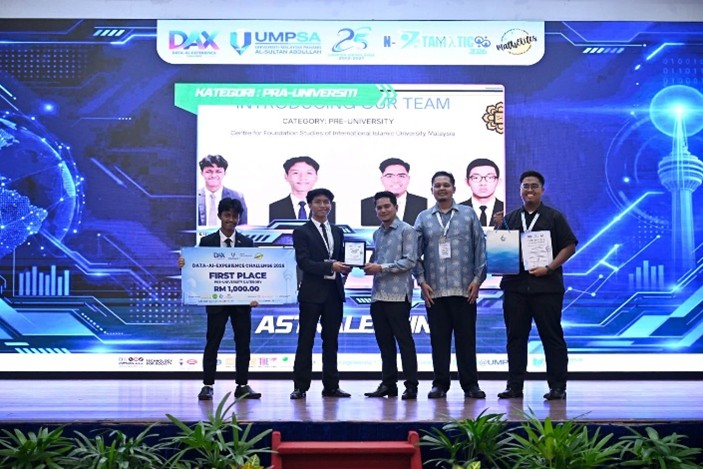
In the Pre-University category, the ASTRALENGINE team from the Centre for Foundation Studies at the International Islamic University Malaysia emerged as the first-place winner. Second place went to Logic Beam from Heriot-Watt University Malaysia, followed by Stem6dy from MARA College Banting in third place, IBMaverix from MARA College Banting in fourth place, and AEXIS from the Centre for Foundation Studies at the International Islamic University Malaysia in fifth place.
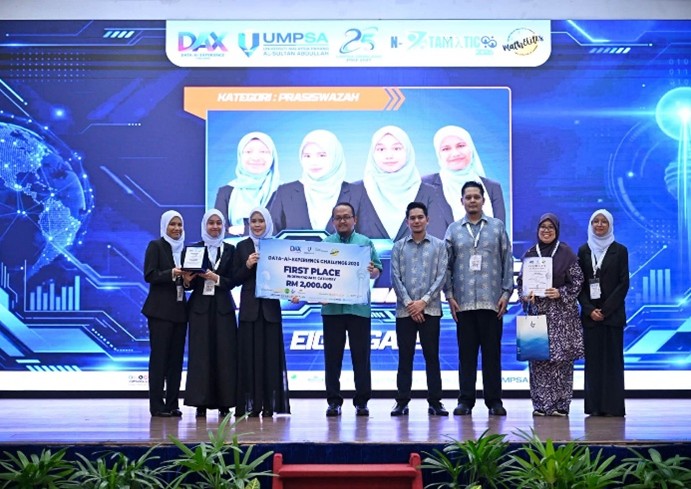
Meanwhile, in the Undergraduate category, the EigenGals team from the International Islamic University Malaysia (UIAM) was crowned the winner, while BOBA from Universiti Malaysia Pahang Al-Sultan Abdullah (UMPSA) took second place and 4-Real from Universiti Putra Malaysia (UPM) secured third place. Fourth place went to Ctrl + AI from Universiti Malaya (UM), while ByteMe from UMPSA finished in fifth place.
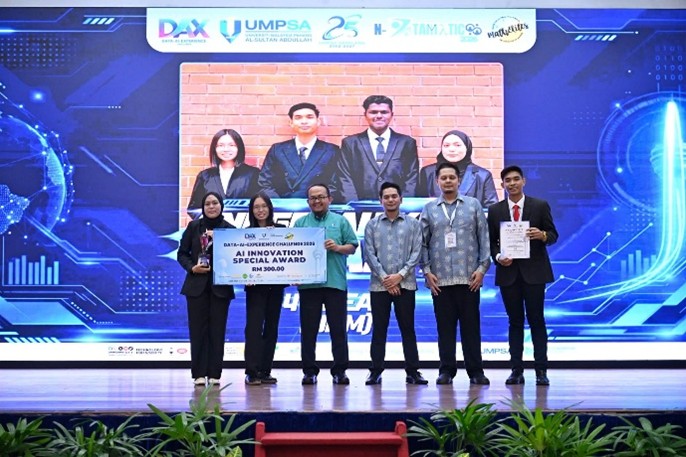
The Special AI Innovation Award was presented to the "4-Real" team from Universiti Putra Malaysia in recognition of their excellence in integrating artificial intelligence elements into their developed solution.
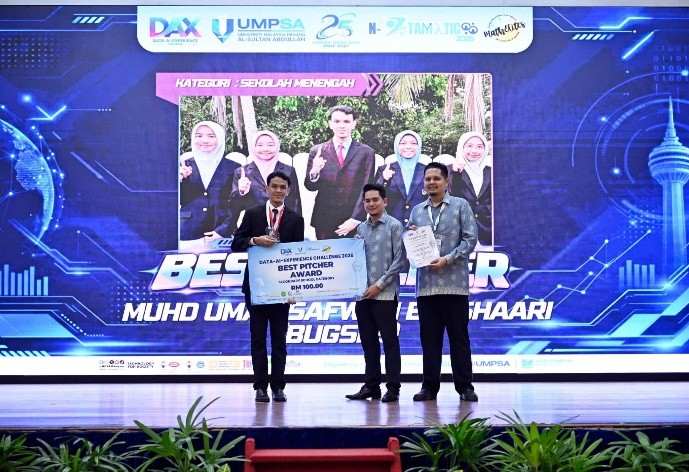
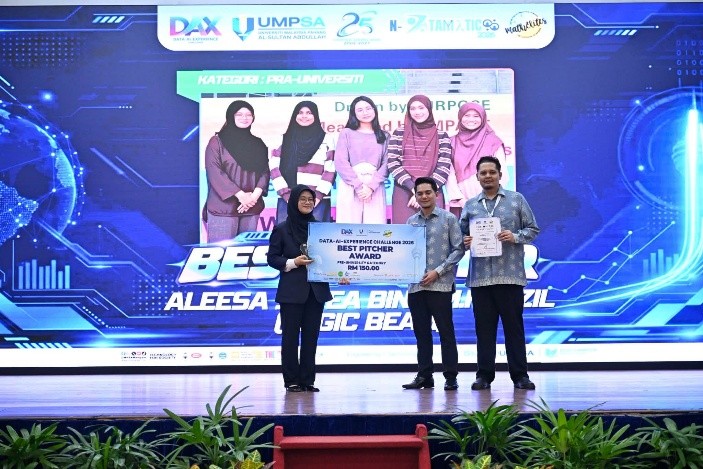
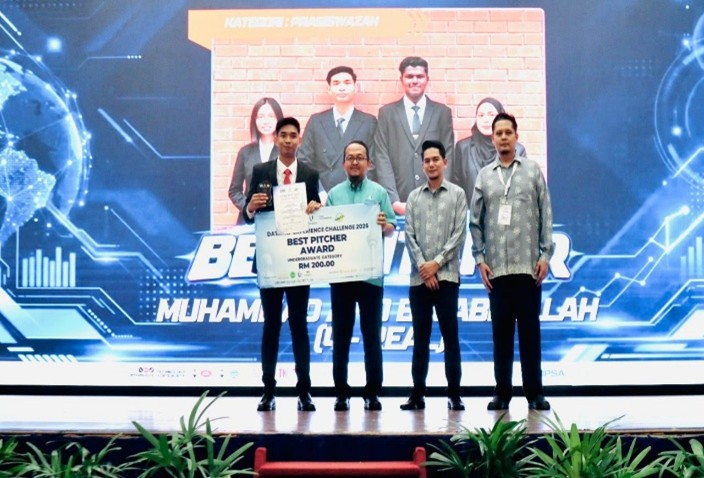
Best Presenter awards were also presented for each category. In the Secondary School category, the award went to Muhd Umar Safwan bin Shaari from the "BUGSES" team (SMK Bukit Goh). Aleesa Sofea binti M. Fadzil from the "Logic Beam" team (Heriot-Watt University Malaysia) received the award for the Pre-University category, while Muhammad Afiq bin Abdullah from the "4-Real" team (Universiti Putra Malaysia) was named the recipient for the Undergraduate category.
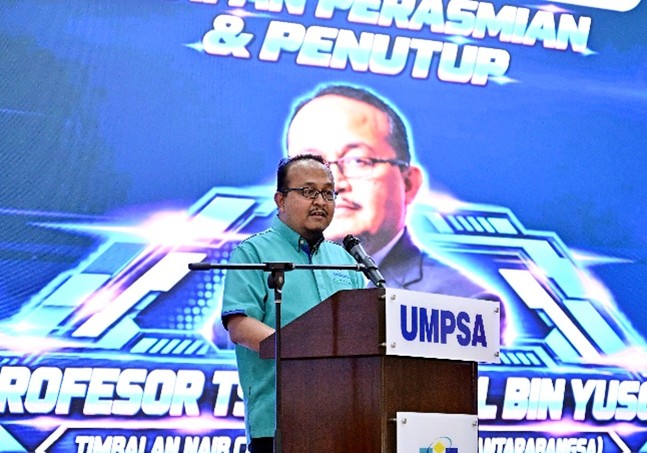
In his opening and closing remarks, UMPSA Deputy Vice-Chancellor (Academic and International), Professor Ts. Dr. Kamal bin Yusoh, emphasized that organizing such programs demonstrates UMPSA’s commitment to fostering a culture of innovation, knowledge exploration, and the development of young talent capable of navigating today’s technological shifts.
He noted that the DAX Challenge plays a pivotal role in cultivating data literacy among the younger generation—transforming them from mere technology users into solution creators who can understand, analyze, and interpret data both critically and systematically.
The event also strengthens the synergy between academia and industry through the participation of various government agencies and industry partners, including the Department of Statistics Malaysia (DOSM), the Malaysian Institute of Road Safety Research (MIROS), the Malaysian Agricultural Research and Development Institute (MARDI), Pengurusan Air Pahang Berhad (PAIP), Netstratum Technologies, and the Institute of Statistics Malaysia (ISM). This collaboration exposes participants to the real-world application of their knowledge while reinforcing ties between educational institutions, the industry, and the community.
Beyond technical skills, the DAX Challenge 2026 emphasizes critical thinking, creativity, problem-solving, communication, and collaboration—aligning with both educational and industry needs in the era of digital transformation. The participation of individuals from diverse backgrounds underscores the importance of STEM talent development; such efforts must begin early and be continuously strengthened to cultivate a generation capable of boldly creating new solutions that benefit society.
He also expressed his appreciation and congratulations to all participants for their dedication, creativity, and ability to transform data into meaningful solutions. The experience gained through the DAX Challenge is expected to serve as a vital stepping stone for participants to further explore STEM, technology, and innovation in the future. Organizing the DAX Challenge not only provides a platform for participants to apply the knowledge they have acquired but also fosters a culture of creative and innovative problem-solving.
The organization of this program demonstrates that future talent development requires close collaboration among universities, schools, government agencies, the industry, and the community. Through such sustained efforts, UMPSA not only produces competition participants but also contributes to shaping future technology leaders, researchers, and innovators capable of making meaningful contributions to society and the nation.
Author: Dr. Siti Hanani binti Mat Yasin